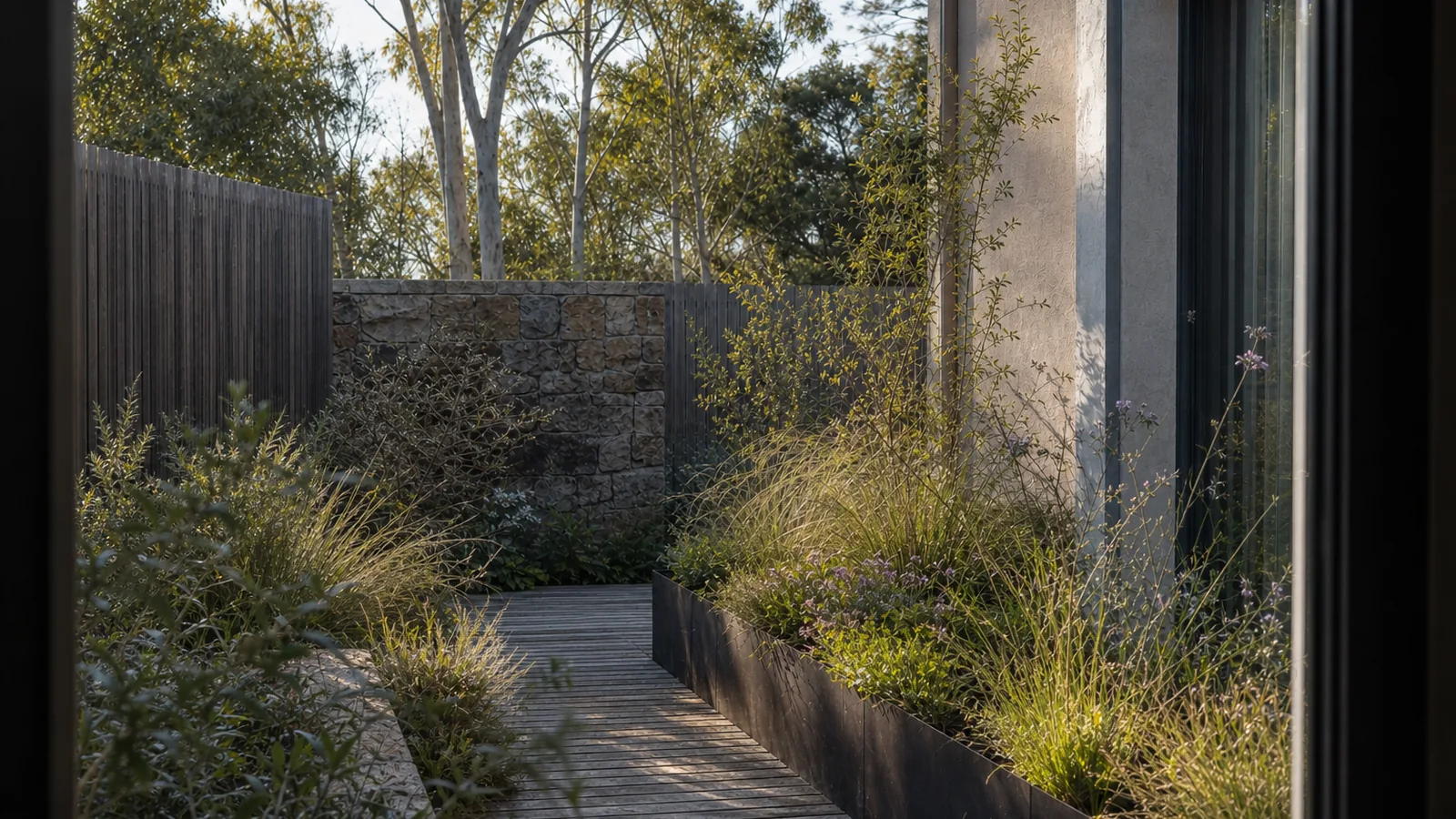
If you've just typed "landscaper Canberra" into Google, you're doing what almost everyone does. You have a garden that isn't working, you want it fixed, and a landscaper is the person who fixes gardens.
Sixteen years in this industry taught me something nobody tells you at that moment: the advice you're about to get depends almost entirely on who picks up the phone.
Every landscaper quotes from inside their own comfort zone
This isn't a criticism. It's how the trade works.
Every landscaping business is built around what it's good at delivering. Some run paving crews and have a stone supplier on speed dial. Some are fabricators who love steel. Some build beautiful decks. Some do turf, irrigation and not much else. Their crews, their tools, their supplier accounts and their whole business cycle are organised around that kind of work — and the quote they write you will be organised around it too.
Ask a paver what your garden needs, and the answer will involve paving.
So when you ring a landscaper before you know what you actually want, you're not really getting advice about your garden. You're getting a description of their business. Whoever you happened to call — that's the garden you'll be offered. It's the luck of the draw, and the draw is worth tens of thousands of dollars.
What that costs you
A quote is not a design. A quote is a price for the thing the landscaper is comfortable building.
The expensive version of this story is the one I see every year: a courtyard that got a big deck because a decking crew came out first, when what the space needed was drainage, one wall, and planting. The deck was built well. It was still the wrong answer. Nobody did anything wrong — the question was just asked in the wrong order.
The order that works
There's two ways you can go:
(1) If you know exactly what you want — you've lived with the garden, you know where the pergola goes, you can describe the materials — go straight to a landscaper. You don't need a designer to bless it. Find a builder whose past work looks like the thing you're describing, because that comfort zone I mentioned is now working for you.
(2) If you don't know 100% what you want, don't start with the person whose job is to build. Start with the person whose job is to work out what should exist. That's what a designer is for: reading the site — light, soil, levels, how you actually live in the space — and turning it into a drawn, dimensioned answer before anyone prices anything.
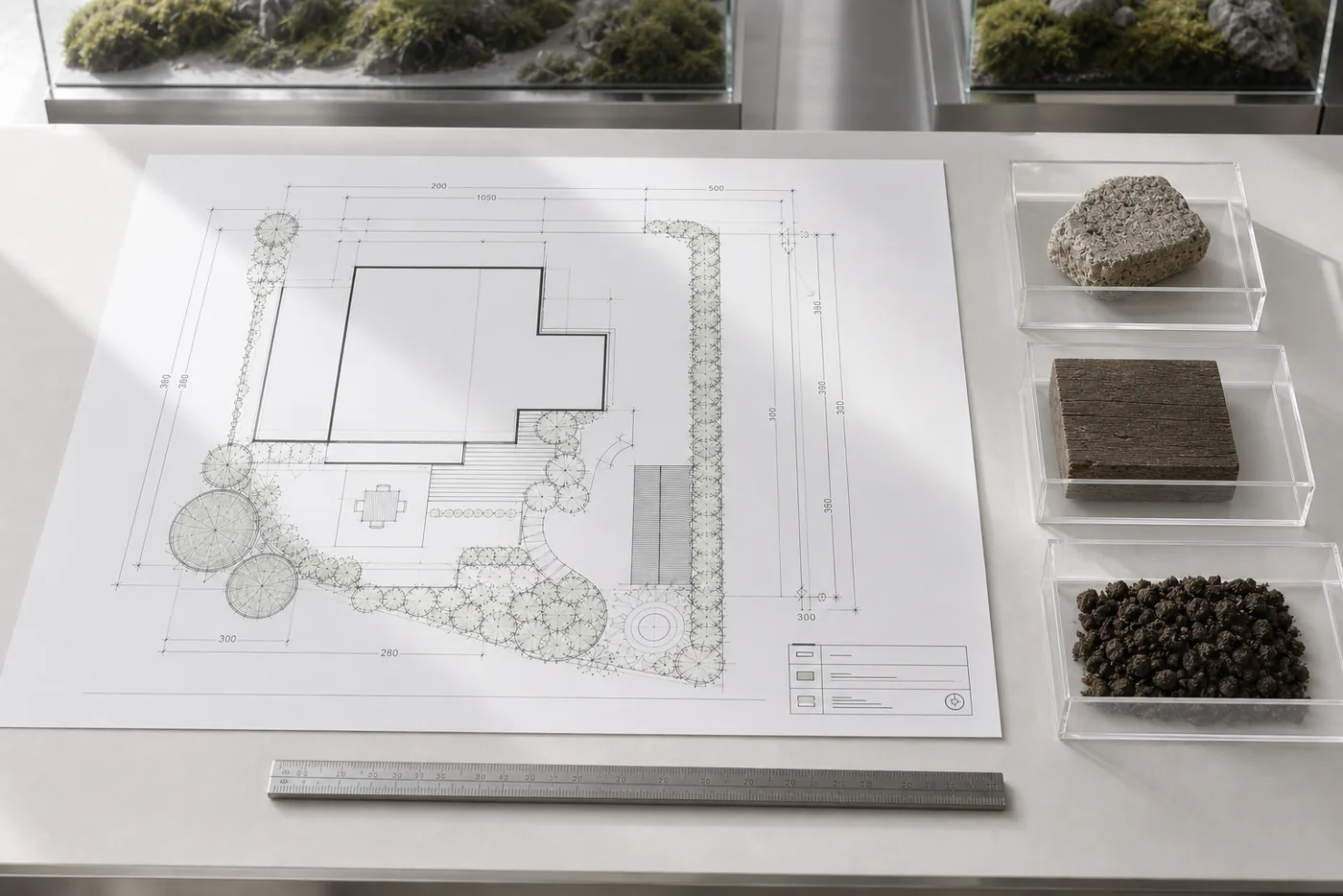
Then the order flips in your favour. With a design in hand, you can put the same drawings in front of two or three landscapers and get quotes for the same garden. The quotes become comparable. The scope can't drift toward anyone's comfort zone, because the scope is on paper. I've watched the spread between quotes on the same drawings pay for the design fee on its own — and the garden you get at the end is the one you wanted, not the one that was easiest to price.
This isn't designers versus landscapers
I work with landscapers on nearly everything I design, and the best builds happen exactly this way: the right trade doing the work that suits them, to a drawing everyone agreed on. A good landscaper would rather quote a clear scope than guess at what you want — vague briefs cost them money too.
The order matters more than the people. Decide what the garden should be, then choose who builds it. Do it the other way around and you're letting a business model make your design decisions.
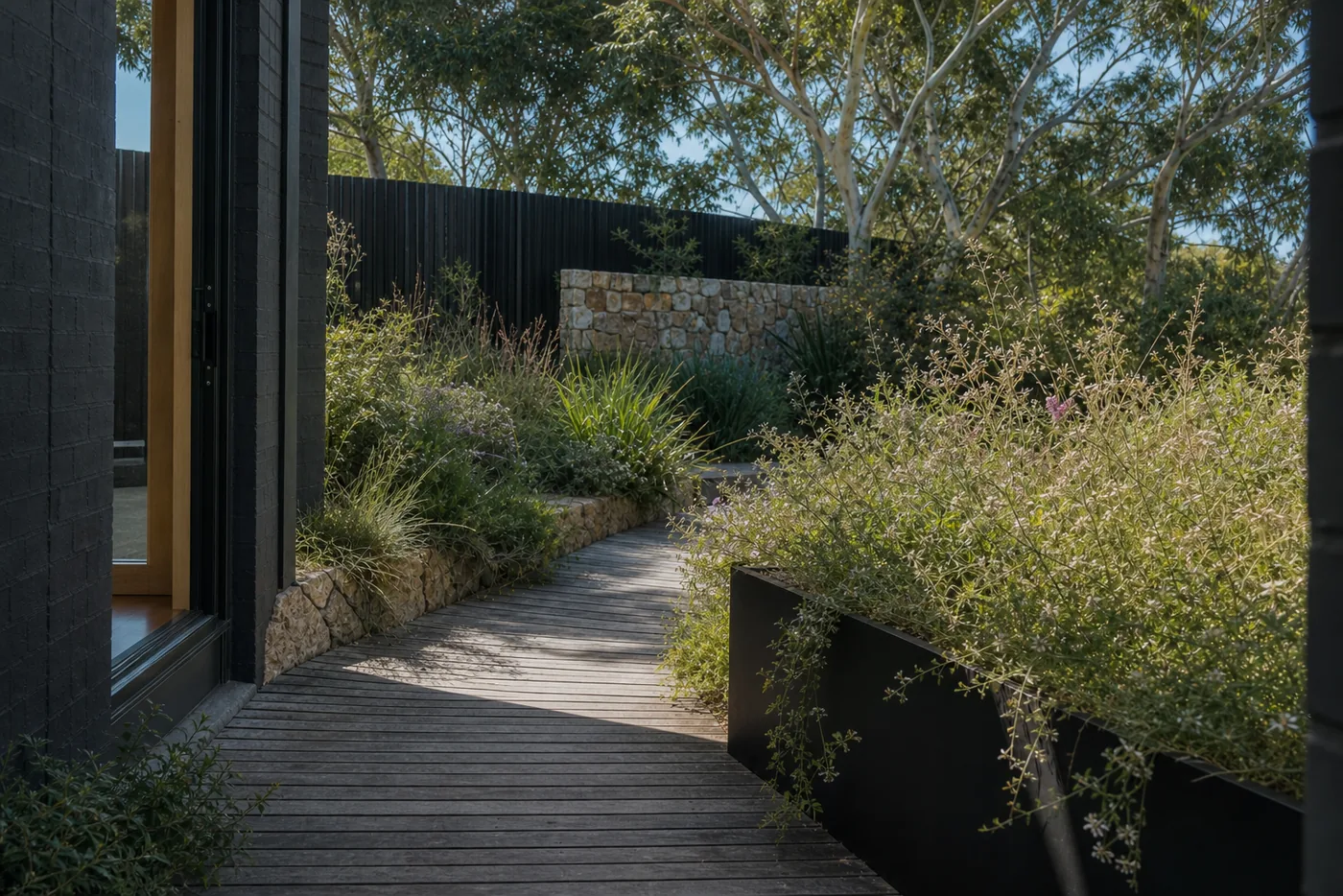
Where to start
Spend time in the garden before you spend money on it. Notice where the light falls and when. Dig a few holes after rain and see where the water sits. Write down what you want the space to feel like before you think about what it should contain — the feeling is the brief; everything else is method.
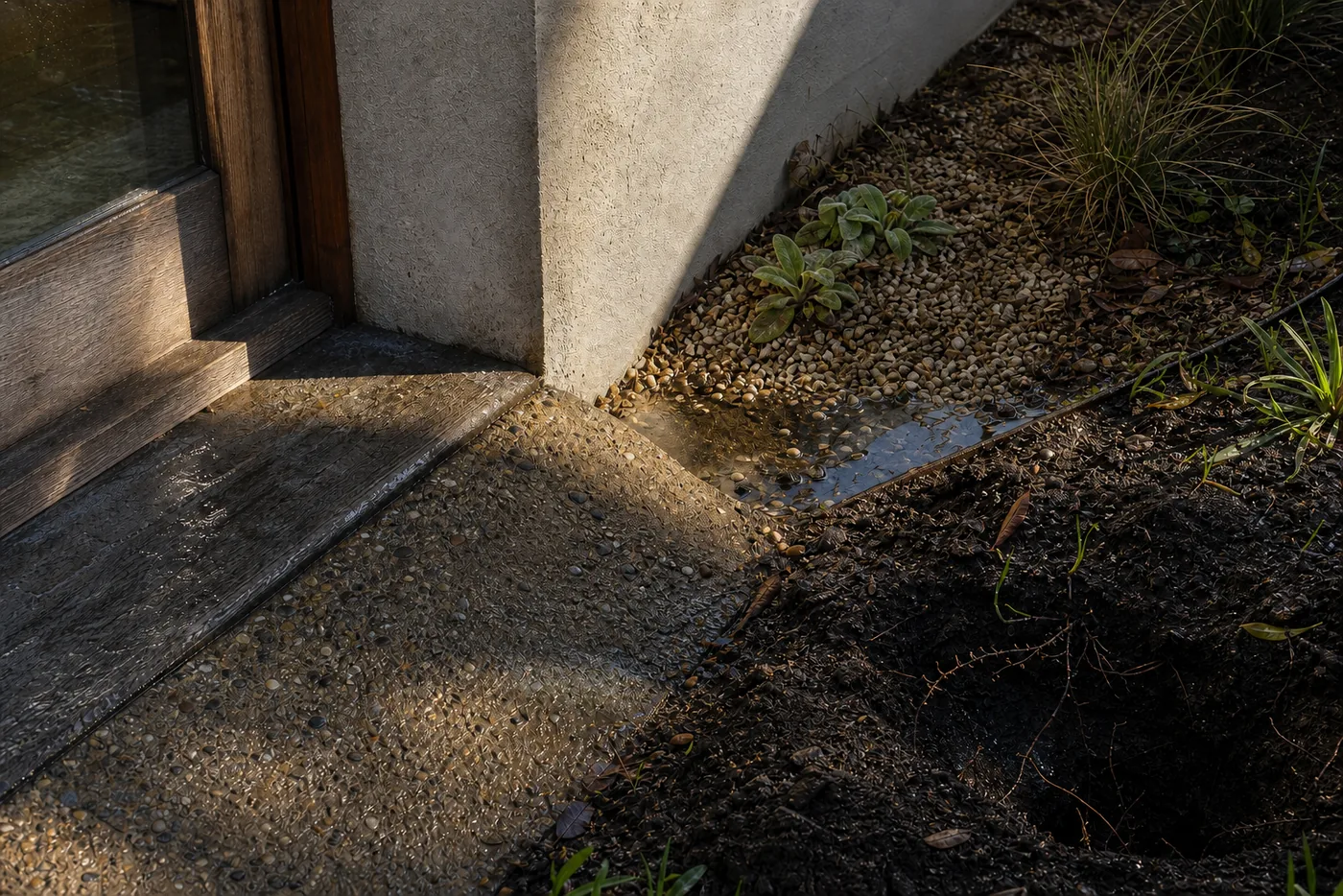
And if you get to the end of that and still can't see the garden clearly — that's not a failure, that's just the moment to bring in a designer. It's the cheapest moment in the whole project to change your mind.
I'm Lach — a fourth generation gardener, 16 years in Canberra's landscape industry, now designing gardens, courtyards and interiors Australia-wide.
If you're at the start of a project and not sure what the space should become, that's exactly the conversation a discovery call is for. Or start smaller — I write one letter a week on spatial design, craft and technology: Lach's Letters.
Book a discovery call